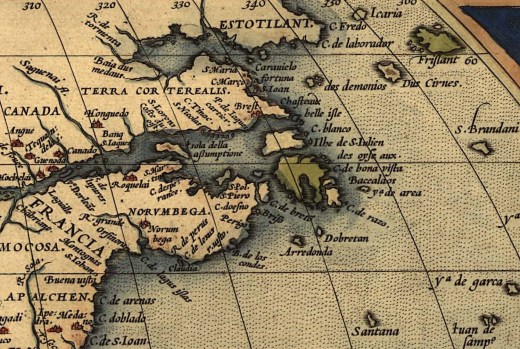
On March 22, 1690, Massachusetts appointed Sir William Phips as a major general to command an expedition to French Acadia. It had become abundantly clear that King William’s War was not just a struggle between the English and Wabanaki. Instead, it was a war between the English and French, who led the attacks and provided the Indians with the means to carry on the hostilities. The Massachusetts authorities decided it was time to take the battle directly to the French and attack Port Royal in Nova Scotia.
Native Mainer Phips had risen to prominence in an extraordinary career. He was born at Nequasset (present-day Woolwich, Maine) near the mouth of the Kennebec River. Phips herded sheep for the first 18 years of his life and then began a four-year apprenticeship as a ship’s carpenter without having any formal schooling. He rapidly advanced from a shepherd boy to a shipwright and then a ship’s captain. In 1675, he established a successful shipyard on the Sheepscot River at Merrymeeting Bay just before King Philip’s War. He became a hero during that war when his village was attacked, and he took many fleeing settlers on board one of his ships.
Phips then became a successful treasure hunter, seeking sunken ships, and won a knighthood after recovering a Spanish galleon near Hispaniola, worth approximately 20 million dollars in today’s gold. After the war, Phipps became the 1st Royal Governor of the Province of Massachusetts Bay. He gained notoriety by establishing the court that conducted the Salem Witch Trials. Many historians believe this hysteria was partially due to the tension and stress of King William’s War.
For the assault on Fort Royal, Phipps was given a squadron of eight vessels and eight hundred men. He easily took the fort on May 9, 1690, for it was being rebuilt when he arrived, and none of its cannons were mounted. Its governor, Louis-Alexandre des Friches de Meneval, had no choice but to surrender. However, when Phips came ashore the next day, he discovered that the Acadians had been removing valuables from the fort, and Phips declared the terms of capitulation null and void. In a highly controversial decision, he then allowed his troops to pillage the town and destroy the church, and he had the fort destroyed. He then sailed back to Boston carrying Meneval and his soldiers as prisoners of war. He was received as a hero with great accolades, although he will long be vilified in Acadian histories for the sacking of the Fort.
In the wake of this success, in August 1690, the Massachusetts government decided to send a much larger expedition against Quebec, the capital of New France, and gave its command to Phips. An attack against Quebec made much sense, as it was the origin of the raiding parties that had hassled and destroyed Schenectady, Salmon Falls, and Falmouth.
On August 20, 1690, Phips headed to Quebec with a fleet of thirty-two ships and two thousand three hundred men on what would be a disastrous mission. As told by Williamson (1889, p. 598): “The fleet, retarded by fortuitous incidents and events, did not arrive before Quebec till the 5th of October. The next morning, the Commodore addressed a note to Count Frontenac, the Governor, demanding a surrender. But the haughty nobleman, rendered more insolent by tidings from Woodcreek, returned a contemptuous answer, adding, —You and your countrymen are heretics and traitors, and Canada would be one, had not the amity been prevented by your Revolution.
Phips, though thwarted by contrary winds, was able, on the 8th, to effect a landing of about thirteen hundred effective men upon the Isle of Orleans, four miles below the town, and to commence a cannonade from his shipping, among which were frigates carrying 44 guns. But their approach was repelled and prevented by the long guns in the French batteries, and the land forces were violently assailed and harassed by the French and Indians from the woods. Amidst these and other discouragements, the Commodore, on the 11th, learned from a deserter the condition and great strength of the place; and the same day, he and his troops reembarked with precipitation. The fleet, overtaken in the St. Lawrence by a violent tempest, was dispersed; two or three vessels were sunk; one was wrecked upon Anticosta; some were blown off to the West Indies; and the residue of the shattered squadron were more than a month on their way home; Sir William himself not arriving in Boston till the 19th of November. His losses by the smallpox, the camp-distemper and other sickness, by the enemy and by shipwreck, were two or three hundred men; and the expenses of the expedition, like its disasters, were great.”
An English defeat of the French in Acadia would have to wait another two decades, when the Treaty of Utrecht was signed in 1713.
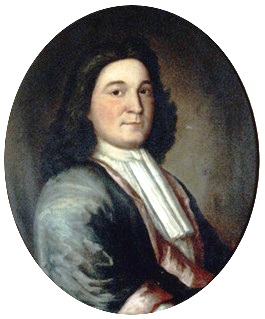
Figure: A portrait by Thomas Child of Sir William Phips, first royal governor of the Province of Massachusetts Bay.
Bibliography:
Brooks, R.B. (2019). History of King William’s War. https://historyofmassachusetts.org/king-williams-war/
Faragher, J. M. (2005). A great and noble scheme: the tragic story of the expulsion of the French Acadians from their American Homeland. W. W. Norton, New York.
Lounsberry, A. (1941) Sir William Phips. Charles Scribner’s Sons, New York.
Williamston, W. D. (1889). The history of the state of Maine: From its first discovery in A.D. 1602 to the separation, A.D. 1820, exclusive. Glazers, Masters, and Smith.
 Turmoil in Dawnland