At about the same time that the Saco River Valley was being settled, Agamenticus, to its east, was also colonized. This colony would become the focus of Sir Ferdinando’s efforts to govern Maine.
The first person to settle at Agamenticus was Edward Godfrey, who arrived around 1630 as a squatter at age 45. Born in 1584, he had been a factor in Sicily, Egypt, and Venice in the 1610s. In the 1620s, he worked as an assessor for Wilmington and was one of the investors in the Plymouth Colony.
Godfrey’s decision to migrate to New England was undoubtedly influenced by adventurer Christopher Levett’s journal, “A Voyage Made into New England,” published in 1628. “Godfrey was an omnivorous collector of books and maps of the New World, and it is not too much of an assumption that Godfrey then read in this volume Levett’s opinion of the “great river called Aguamenticus” where he thought “a good plantation may be settled for there is a good harbor for ships, good ground and much already cleared fit for the planting of corne and other fruits.” There it lay ready for the taking, and, as it happened, this was where Edward Godfrey staked his claim. (Banks, 1931, pp. 47-48)
Godfrey sailed for New England in 1629, with the destination of Piscataqua, and arrived there on November 17 with his nephew John, an eleven-year-old youth. He may also have traveled with Col. Walter Norton, “scion of a family of wealth and distinction in the official and mercantile circles of England” (Banks, 1931, p. 85), who would later become his townsman. Godfrey spent a little time in Piscataqua but soon headed to Agamenticus on a fishing boat.
The founder of Agamenticus built his house on a tongue of land at a place he called Point Bollyne, likely inspired by his ancestor Godfrey of Bologne. His house was: “undoubtedly a rough log cabin … with glazed windows, brick chimney, plastered walls, and ceilings … The axe and adze hewed down and faced the felled timber for the walls, and the roof was probably thatched over a framework of saplings or small hand-sawn logs. Carpenters from the settlement at Piscataqua must have done the actual work of construction, for Godfrey himself was not an artisan. His previous occupation as a merchant scarcely fitted him for the part of a traditional pioneer. Clay dug from the banks nearby, or from the tidal flats, was daubed into the chinks between the logs to keep out the wind and rain, while oiled paper served as the translucent film in substitution for glass in the rough window frames. For a chimney and fireplace we cannot conceive anything more elaborate than one built of flat field stones held together, perhaps, by cement, or more likely by smoked-baked clay. Imagination does not give us much encouragement in trying to depict the interior furnishings” (Banks, 1931, p. 45)
Walter Norton soon followed Godfrey to Agamenticus. He had first settled in Massachusetts Bay, but being an Episcopalian and Royalist, he did not fit in well with the Puritans, so he left, heading to Piscataqua and then Agamenticus. “Godfrey, in the eagerness which characterized all his work in Maine, must have taken Norton to the beautiful river of Agamenticus, where he had recently settled, and shown to this seasoned adventurer the great forests and rolling meadows bordering its banks. To his astonishment, the vision of a virgin country of unknown wealth was laid before him, with its thousands of untilled acres, to be had for the asking, at the pleasure of the Council for New England.” (Banks, 1931, p. 86)
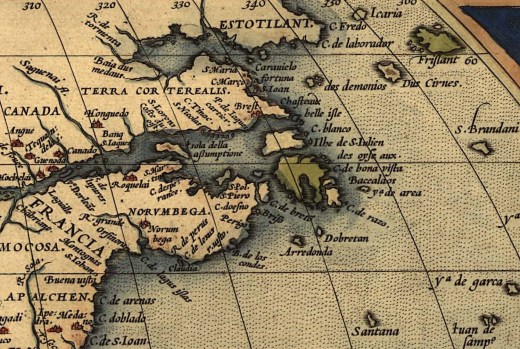
A patent for Agamenticus.
Colonel Norton returned to England almost immediately, filled with renewed enthusiasm, after his fruitless experience in Massachusetts. There, he conferred with Sir Ferdinando Gorges and on December 1, 1631, with the help of family and friends, obtained a patent from the Council of New England, covering twenty-four thousand acres in equal division on both sides of the river of Agamenticus. The west half of the river was allotted to Sir Ferdinando, and the other half became the property of a dozen persons, of which Norton and Godfrey were members.
The royal order also specified “The religion now possessed in the Church of England and the ecclesiastical government now used in the same, [would be established] with as much convenient speed as may be.” This was completely counter to the Puritan settlement of Massachusetts Bay.
For some unknown reason, this patent was superseded within three months. The terms of the new patent were an almost verbatim copy of the first one, with the withdrawal of four of the patentees, Coppin, Woolsey, George Norton and Rainsford, and the substitution of four other names, Seth Bull, Cittizen and Skinner of London, Dixie Bull, Matthew Bradley of London, Gent, and John Bull, Son of said Seth. The addition of Dixie Bull to the second Agamenticus patent would be significant. Starting out as a trader along Maine’s coast, he became a notorious pirate.
With the patent in hand, Norton returned to Agamenticus in the spring of 1632, bringing his wife and family. They were soon joined by most of the other awardees and their families, all excited to take possession of their land. Their little houses and farms would soon dot in series along the river.
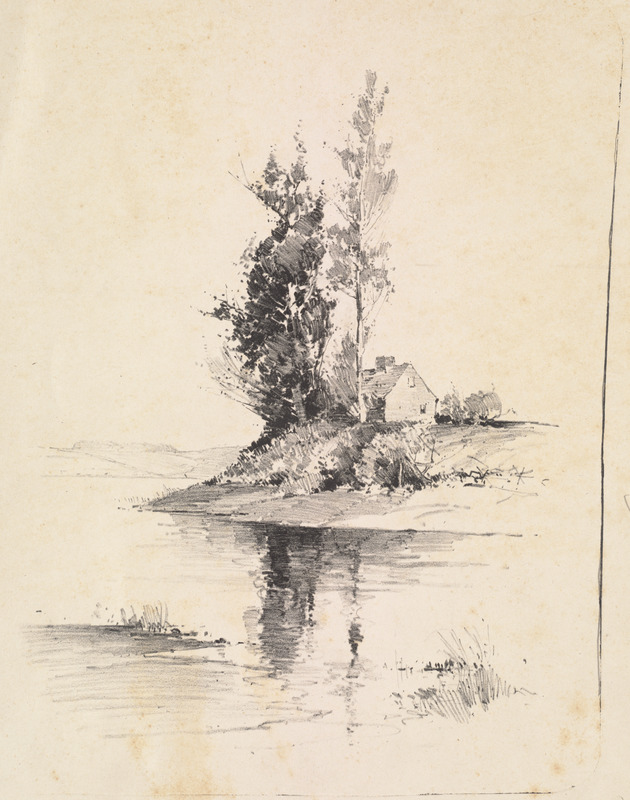
Illustration: Agamenticus River, York, Maine. Charles H. Woodbury (1864-1940) Boston Public Library.
Bibliography:
Banks, C. E. (1931) History of York Maine, Successively known as Bristol {1632), Agamenticus (1641), Gorgeana (1642), and York (1652). Vol. 1. The Calkins Press: Boston.
Baxter, J. P. (1902) Two hundredth anniversary, Georgiana – York, 1652 – 1902. Old York Historical and Improvement Society, York, Maine.
Kences, (2021) York in American history: The rise and fall of Edward Godfrey. Portsmouth Herald
 Turmoil in Dawnland